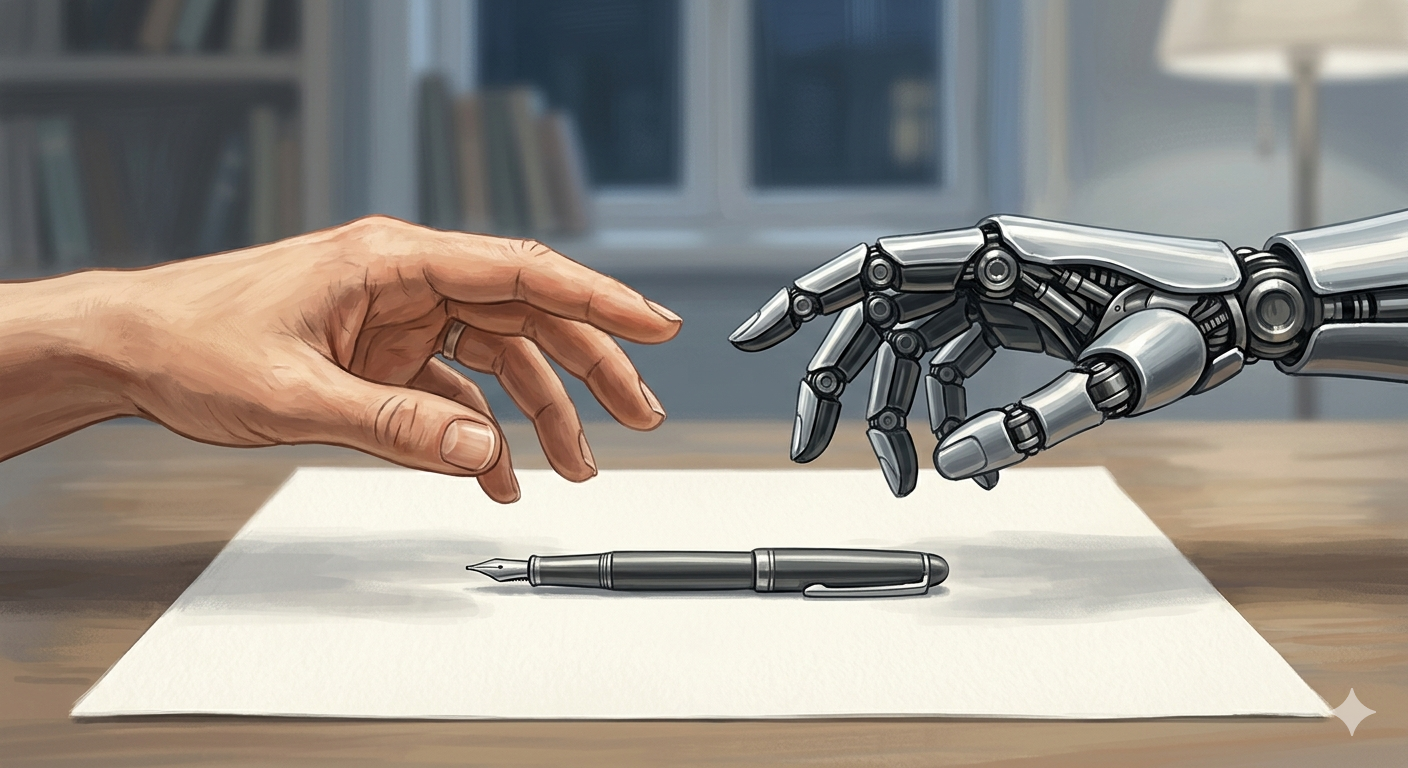
There used to be a moment — a terrifying, clarifying moment — when you sat down to write and faced nothing.
A blank page. A cursor blinking with patient indifference. No suggestions, no alternatives, no gentle AI nudge toward a “stronger opening.” Just you, whatever you were thinking, and the gap between the two.
That moment is disappearing. Not loudly, not suddenly — quietly, the way a habit dissolves when you stop needing it.
The blank page was never comfortable. Writers complained about it endlessly — the paralysis, the false starts, the staring. But discomfort has a function. It forces you to ask: what do I actually want to say?
That question is harder than it looks. It requires you to hold an unformed idea long enough to give it shape. To tolerate ambiguity before reaching for clarity. To discover what you think by making yourself say it.
AI writing tools short-circuit this. They offer a first sentence before you’ve earned one. They pattern-match to your intent and hand you a draft — competent, smooth, mostly right. And so the question shifts from what do I want to say? to is this what I meant?
That’s a different question. A smaller question.
Here’s the thing: steering is a real skill. Editing matters. Knowing what’s wrong about a draft, what’s missing, what rings false — that’s craft. AI hasn’t made that irrelevant.
But starting is also a skill. The act of beginning from nothing builds something in the writer — a tolerance for uncertainty, a trust in the process, a relationship with your own voice that only develops through repeated exposure to that uncomfortable blinking cursor.
When we outsource beginnings, we don’t just save time. We skip a step that was doing work we couldn’t see.
I use AI writing tools. I’m not making a case for suffering. But I do think we should be honest about what we’re trading away when we fill the blank page before we’ve felt it.
The creativity that remains — choosing, shaping, rejecting, refining — is real and meaningful. But it’s creativity without the silence before it. And silence, it turns out, was where a lot of the interesting stuff was happening.
Not the absence of words. The pressure that makes them necessary.